
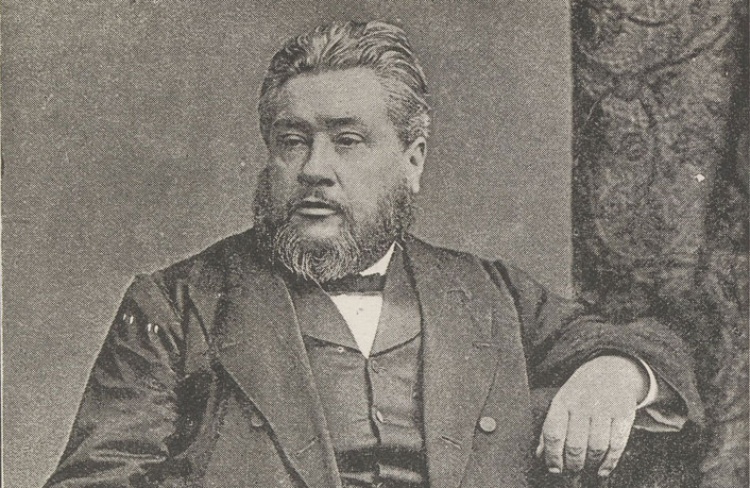
11 Reasons Spurgeon Was Depressed
The Spurgeon Center at Midwestern Seminary has a fascinating article about Spurgeon’s depression: 11 Reasons Spurgeon Was Depressed. I’d encourage you to read the original article.
I’ll highlight a few thoughts and quotes, especially related to Spurgeon’s own belief that his depression was not simply a spiritual matter, but also an embodied-soul matter.
Spurgeon’s Reflections on His Depression
Spurgeon thought deeply and frequently about his depression. According to the Midwestern Seminary article:
“Spurgeon owned more than thirty books on mental health. He read about depression, wrote about depression, and suffered from depression. Spurgeon’s letters contain numerous references to his sinking spirits.”
Some today falsely proclaim an emotional health and wealth gospel, suggesting that “spiritual people” don’t get overwhelmed by emotions, depression, and anxiety.
Spurgeon would like to have a word with those folks.
He often called himself a “prisoner” and wept without knowing why.
Spurgeon said of himself, “I pity a dog who has to suffer what I have.”
The great preacher at times was unable to preach due to his emotional distresses.
“To my great sorrow, last Sunday night I was unable to preach. I had prepared a sermon upon this text, with much hope of its usefulness; for I intended it to be a supplement to the morning sermon, which was a doctrinal exposition. The evening sermon was intended to be practical, and to commend the whole subject to the attention of enquiring sinners. I came here feeling quite fit to preach, when an overpowering nervousness oppressed me, and I lost all self-control, and left the pulpit in anguish.”
John Piper in, Charles Spurgeon: Preaching through Adversity, describes his reflections on Spurgeon “weeping like a baby.”
“It is not easy to imagine the omni-competent, eloquent, brilliant, full-of-energy Spurgeon weeping like a baby for no reason that he could think of. In 1858, at age twenty-four it happened for the first time. He said, ‘My spirits were sunken so low that I could weep by the hour like a child, and yet I knew not what I wept for’” (The Anguish and Agonies of Charles Spurgeon, 24).
Spurgeon himself describes his “causeless depression” and “beclouding hopelessness.
“Causeless depression cannot be reasoned with, nor can David’s harp charm it away by sweet discoursings. As well fight with the mist as with this shapeless, undefinable, yet all-beclouding hopelessness … The iron bolt which so mysteriously fastens the door of hope and holds our spirits in gloomy prison, needs a heavenly hand to push it back” (Lectures to My Students, 163).
Spurgeon’s Embodied-Soul Depression
The Midwestern Seminary article asks a vital question:
“Was Spurgeon’s depression only a spiritual problem?”
They then answer their own question:
“Spurgeon didn’t think so. He did acknowledge ‘soul sickness,’ but also understood that the brain is just as broken as the body. If the body needs medicine, why not the mind?”
11 Spurgeon Quotes on His Embodied-Soul Depression
According to his own writings, what did Spurgeon think about the cause of his depression?
1. “It is not repentance,” he speculated, “but indigestion or some other evil agency depressing the spirits.”
2. “The troubled man experiences a good deal, not because he is a Christian, but because he is a man, a sickly man, a man inclined to melancholy.”
3. “Do not think it unspiritual to remember that you have a body. . . . The physician is often as needful as the minister.”
4. “The mind can descend far lower than the body, for there are bottomless pits.”
5. “Some are touched with melancholy from their birth.”
6. “I have been very ill for more than five weeks, and during that time I have been brought into deep waters of mental depression.”
7. “A sluggish liver will produce most of those fearsome forebodings, which we are so ready to regard as spiritual emotions.”
8. “All mental work tends to weary and to depress, for much study is a weariness of the flesh.”
9. “I cannot yet call myself free from fits of deep depression, which are the result of brain-weariness; but I am having them less frequently, and therefore I hope they will vanish altogether.”
10. “Living in an unbroken series of summer days, where no cold mists are dreamed of, it is no great marvel that rheumatic pains fly away, and depression of spirit departs.”
11. Spurgeon called his depression “a prophet in rough clothing.” His weakness reminded him that, as humans, we are all designed from dust. “As to mental maladies, is any man altogether sane? Are we not all a little off the balance?”
Spurgeon and His Sorrows: Rest and Nature
Spurgeon in his sorrows, wisely explained to his students that “a mouthful of sea air, or a stiff walk in the wind’s face would not give grace to the soul, but it would yield oxygen to the body, which is next best” (Lectures to My Students, 158). John Piper comments,
“Spurgeon recommends that we breathe country air and let the beauty of nature do its appointed work.”
Piper also notes, “Very practically Spurgeon supplements his theological survival strategy with God’s natural means of survival—his use of rest and nature.” Piper explains that Spurgeon “counsels us to rest and take a day off and open ourselves to the healing powers God has put in the world of nature.” Piper also quotes Spurgeon saying to his students,
“It is wisdom to take occasional furlough. In the long run, we shall do more by sometimes doing less. On, on, on for ever, without recreation may suit spirits emancipated from this ‘heavy clay’, but while we are in this tabernacle, we must every now and then cry halt, and serve the Lord by holy inaction and consecrated leisure. Let no tender conscience doubt the lawfulness of going out of harness for a while” (Lectures to My Students, 161).
Eventually this annually involved a lengthy time of sabbatical that included Spurgeon resting his embodied-soul in the hot springs of France.
Spurgeon biographer Arnold Dallimore records that when Spurgeon was 45, he experienced a physical and emotional breakdown that included attacks of gout and depression. During this period, Spurgeon took a five-month break from the pulpit and began to prolong his annual vacation in order to recover his health. Dallimore describes the details:
“Each summer he tried to get away to Scotland for two weeks, where he was the guest of a well-to-do and very earnest Christian, James Duncan of Benmore Castle. And almost every winter he was able to spend a month or six weeks at Menton in southern France, and those periods of release from the damp and chill of England did much toward providing the health he needed to carry on with some measure of vigor during the rest of the year.”
Piper explains, “Spurgeon was right when he said,”
“The condition of your body must be attended to … a little more … common sense would be a great gain to some who are ultra spiritual, and attribute all their moods of feeling to some supernatural cause when the real reason lies far nearer to hand. Has it not often happened that dyspepsia [indigestion, an upset stomach, an ulcer] has been mistaken for backsliding, and bad digestion has been set down as a hard heart?” (Lectures to My Students, 312).
The Minister’s Fainting Fits
In The Minister’s Fainting Fits (see Encouragement for the Depressed) Spurgeon spoke in even greater detail about the embodied-souls of pastors. Spurgeon saw himself and others as broken vessels, jars of clay.
“Most of us are in some way or other unsound physically. The great mass of us labor under some form or other of infirmity, either in body or mind. Certain bodily maladies, especially those connected with the digestive organs, the liver, the spleen, are the fruitful fountains of despondency; and, let a man strive as he may against their influence, there will be hours and circumstances in which they will, for awhile, overcome him” (67-68, quoted in Encouragement for the Depressed).
Hear what Spurgeon is saying. Some bodily infirmities are fountains of depression which will overcome the most spiritual person.
Spurgeon continues, moving now to our mental infirmities.
“As to mental maladies, is any man altogether sane? Are we not all a little off the balance? Some minds appear to have a gloomy tinge essential to their very individuality; of them it may be said, ‘Melancholy marked them for her own;’ fine minds withal, and ruled by noblest principles, but yet most prone to forget the silver lining and to remember only the cloud” (68).
We don’t have to surmise what Spurgeon is implying. He makes it crystal clear:
“Where in body and mind there are predisposing causes to lowness of spirit, it is no marvel if in dark moments the heart succumbs to them…. We have the treasure of the gospel in earthen vessels, and if there be a flaw in the vessel here and there, let none wonder” (70, 71).
According to Spurgeon, there can be predisposing causes of depression in both our body and mind—in our embodied-soul.
Physiological Interventions
What is a person to do? What is a minister/pastor to do? In The Minister’s Fainting Fits, Spurgeon includes physiological interventions in his counsel for depression. First, he highlights physical causes.
“There can be little doubt that sedentary habits have a tendency to create despondency in some constitutions” (75).
Spurgeon documents this by quoting Robert Burton’s The Anatomy of Melancholy, where Burton includes a chapter on the cause of sadness: “Students are negligent of their bodies…. Scholars neglect that instrument—their brain and spirit which they use daily” (76). Spurgeon then makes his own case for the body’s contribution to depression.
“To sit long in one posture, poring over a book or driving a quill, is int itself a taxing of nature; but add to this a badly ventilated chamber, a body that has long been without muscular exercise, and a heart burdened with many cares, and we have all the elements for preparing a seething cauldron of despair, especially in the dim months of fog” (76-77).
This is neuroscience before neuroscience existed. This is understanding that the body impacts the soul, that lack of “muscular exercise” and a sedentary lifestyle is “a seething cauldron” for depression.
So what does Spurgeon counsel? Does he “stay in his lane” as a soul physician and only talk about the soul? No. Spurgeon is a soul physician of the embodied-soul, so he offers specific physiological interventions.
First, get outside and move around in nature!
“Let a man be naturally blithe as a bird, he will hardly be able to bear up year after year against such a suicidal process he will make his study a prison and his books the warders of a jail, while nature lies outside his window calling him to health and beckoning him to joy. He who forgets the humming of the bees among the heath, the cooing of the wood pigeons in the forest, the songs of birds in the woods, the ripping of rills among the rushes, and the sighing of the among the pines needs not wonder if his heart forgets to sing and his soul grows heavy” (77).
Second, breathe! (Note that this includes a longer version of the quote from Piper above.)
“A day’s breathing of fresh air upon the hills or a few hours ramble in the beach woods’ umbrageous calm would sweep the cobwebs out of the brains of scores of our toiling ministers who are now but half alive. A mouthful of sea air or a stiff walk in the wind’s face would not give grace to the soul, but it would yield oxygen to the body, which is next best” (78).
Soul physicians of embodied-souls provide this biblical counsel; they offer this physiological intervention: “When your soul is half alive, breathe! Exercise!”
Spurgeon the soul physician of embodied-souls is not yet finished providing physiological counsel for depression. Third, he counsels physical rest.
“In the midst of a long stretch of unbroken labor, the same affliction may be looked for. The bow cannot be always bent without fear of breaking. Repose is as needful to the mind as sleep to the body. Our Sabbaths are our days of toil, and if we do not rest upon some other day, we shall break down. Even the earth must lie fallow and have her Sabbaths, and so must we. Hence the wisdom and compassion of our Lord, when he said to his disciples, ‘Let us go into the desert and rest awhile’ (Mark 6:31)…. The Master knows better than to exhaust his servants and quench the light of Israel. Rest time is not waste time. It is economy to gather fresh strength” (85-86).
Spurgeon, like Jesus, the ultimate Soul Physician of embodied-souls, prescribes the embodied-soul intervention of rest.
Spurgeon continues, providing illustrations fitting for his day. (Note that this includes a longer version of the quote from Piper above.)
“Fishermen must mend their nets, and we must, every now and then, repair our mental waste and set our machinery in order for future service.
To tug the oar from day to day, like a galley slave who knows no holidays, suits not mortal men.
Millstreams go on and on forever, but we must have our pauses and our intervals.
Who can help being out of breath when the race is continued without intermission?
Even beasts of burden must be turned out to grass occasionally; the very sea pauses at ebb and flood; earth keeps the Sabbath of the wintry months; and man, even when exalted to be God’s ambassador, must rest or faint; must rim his lamp or let it burn low; must recruit his vigor or grow prematurely old.
It is wisdom to take occasional furlough. In the long run, we shall do more by sometimes doing less.
On, on, on forever, without recreation, may suit spirits emancipated from this ‘heavy clay,’ but while we are in this tabernacle, we must every now and then cry halt and serve the Lord by holy inaction and consecrated leisure” (87-88).
If we were only soul physicians of spirits, then we could eliminate our calling to offer physiological counsel.
Accumulated Trauma
While not using the language of trauma, Spurgeon’s keen understanding of embodied-souls enlightened him to what today we call “stored” trauma, or at the very least, “accumulated trauma.”
“Accumulated distresses increase each other’s weight; they play into each other’s hands, and, like bands of robbers, ruthlessly destroy our comfort. Wave upon wave is severe work for the strongest swimmer. The place where two seas meet strains the most seaworthy keel. If there were a regulated pause between the buffetings of adversity, the spirit would stand prepared; but when they come suddenly and heavily, like the battering of great hailstones, the pilgrim may well be amazed. The last ounce breaks the camel’s back, and when the last ounce is laid upon us, what wonder if we, for awhile, are ready to give up the ghost!” (92-93).
“When troubles multiply, and discouragements follow each other in long succession, like Job’s messengers, then, too, amid perturbation of soul occasioned by evil tidings, despondency despoils the heart of all its peace. Constant dropping wears away stones, and the bravest minds feel the fret of repeated affliction” (91).
“If a scanty cupboard is rendered a severer trail by the sickness of a wife or the loss of a child, and if ungenerous remarks of hearers are followed by the opposition of deacons and the coolness of members, then, like Jacob, we are apt to cry, ‘All these things are against me’ (Gen. 42:36)” (91-92).
Hope in Hopelessness
Spurgeon gets us. He understands how depressing depression is! (Note that this includes a longer version of the quote from Piper above.)
“Causeless depression is not to be reasoned with, nor can David’s harp charm it away by sweet discoursings. We may as well fight with the mist as with this shapeless, undefinable, yet all-beclouding hopelessness. One affords himself no pity when in this case, because it seems so unreasonable to be troubled without manifest cause, and yet troubled the man is, even in the very depths of his spirit. If those who laugh at such melancholy did but feel the grief of it for one hour, their laughter would be sobered into compassion. Resolution might, perhaps, shake it off, but where are we to find the resolution when the whole man is unstrung? The physician and the divine may unite their skill in such cases, and both find their hands full, and more than full” (93-94).
Is there then no hope? For Spurgeon, ultimately our hope is not in ourself. It is not even in human soul physicians—though they can be God’s instruments. Our final hope is in our ultimate Soul Physician. At times, for reasons known only to Him, He allows us to experience “the dark night of the soul.” While we await His timing for our relief, we:
“Cry with the apostle, ‘Blessed be the God, even the father of our Lord Jesus Christ, the Father of mercies, and the God of all comfort, who comforts us in all our tribulations, that we may be able to comfort them which are in any trouble, by the comfort wherewith we ourselves are comforted of God’ (2 Cor. 1:3-4)” (94).
“By all the castings down of his servants God is glorified, for they are led to magnify him when again he sets them on their feet, and even while prostrate in the dust their faith yields him praise. The speak all the more sweetly of his faithfulness and are more firmly established in his love…. Heaven shall be all the fuller of bliss because we have been filled with anguish below, and earth shall be better tilled because of our training in the school of adversity” (98).
Two Similar Stories
For a similar story, see, 6 Lessons from a Depressed Puritan Pastor. The Puritan Pastor, Timothy Rogers, lived from 1658-1728. Rogers was a godly and competent pastor. On at least two occasions, each lasting an extended period of time, Rogers was overwhelmed by severe depression. Due to his struggle with severe depression, Rogers became committed to ministering to others who experienced depression. As part of his ministry, Rogers wrote A Discourse on Trouble of Mind and the Disease of Melancholy. In the aforementioned blog post, I draw out 6 lessons from Timothy Roger’s life and writings.
Also see, Richard Baxter on Depression, Scrupulosity (OCD), and the Embodied-Soul. Long before the advent of modern psychology and neuroscience, Baxter understood the embodied-soul because he understood Scripture. From Baxter we learn the role of the body in depression and OCD, and we learn the biblical basis for physiological interventions.

Thanks Bob, this was a great reminder about how frail we all are, how much I need to stay connected to the vine, how I need to be more patient with those in my circle of family and friends, and how much I need to practice the “one another”‘s in my local body of believers.
What kind of ‘spiritual problem’ would cause depression?
According to Spurgeon, one possible cause is spiritual conviction of sin: Conviction: “I often wonder, to this day, how it was that my hand was kept from rending my own body in pieces through the awful agony which I felt when I discovered the greatness of my transgression.” Psalm 32 and Psalm 51 reflect David’s spiritual depression when he fought the conviction of sin.
Job was depressed and fold it was his fault, but he was righteous. It was not sin that caused his sorrows, but God choosing a righteous person to show even the righteous suffer.