

A Guest Post by Dan Brewer
You’re reading Part 5 in a blog mini-series of guest post by biblical counselors who attended the 2025 Association of Biblical Counselors (ABC) Called to Counsel Conference. On Facebook and X/Twitter, I put out this call:
Did you attend the ABC Called to Counsel Conference? Would you like to share a public testimony that I could post at RPM Ministries?
- The first post was by Dr. Tim Allchin. You can read it here: Similarities and Differences Between the ABC and the ACBC Conferences.
- The second post was by ACBC Certified biblical counselor Sarah Puebla. You can read it here: The 2025 ABC Called to Counsel Conference: Christ-Centered Truth for Life.
- The third post was by Rusty Dawson. You can read it here: The 2025 ABC Called to Counsel Conference: Speaking the Truth in Love.
- The fourth post we by Brooke Shepherd. You can read it here: The 2025 ABC Called to Counsel Conference: Grace and Truth.
Meet Dan
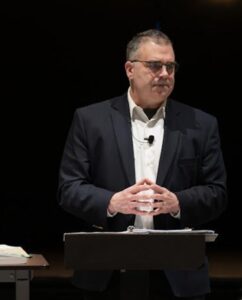 Today’s post is by Dan Brewer. Dan holds a B.A. in Civil Engineering from the University of Washington, an M.A. in Biblical Counseling from Faith Bible Seminary, and is ACBC certified in biblical counseling. Dan is the Director of Biblical Counseling and Pastoral Care at Christ’s Church Federal Way. Dan has written articles for the Biblical Counseling Coalition and for RPM Ministries. He will be teaching biblical counseling to pastors and ministry leaders from Turkmenistan this summer. Dan and his wife, Gail, have five grown children, and five precious grandchildren.
Deciding for Myself
This was my first time attending an ABC conference. I chose to attend the ABC conference this year because I wanted to see first-hand what all the fuss is about. Are these brothers and sisters in the Lord actually zombie-infected?
Here are my take-aways.
Pre-Conference and Plenary Sessions
The speakers at the pre-conference sessions excellently and eloquently exegeted Lamentations 3, and the speakers for the plenary sessions skillfully and surgically walked us through Romans 8. All of these speakers competently applied God’s Word to biblical counselors as well as the issues that are typically encountered in the counseling room. These sessions were, in a word—awesome.
In fact, I had to pinch myself and remind myself I wasn’t at an ACBC conference. In other words, there was absolutely no difference in these sessions in what you would hear at and ACBC conference—none.
Breakout Sessions
Now for the breakout sessions. I intentionally chose to attend portions of two different tracks: Track A – Mental Health: Biblically Unpacking Diagnoses, and Track G – Understanding Emotions: Shame, Guilt & Regret. I chose these tracks for two reasons; 1) if there was ever going to be a place where I might encounter something that has traditionally been called “integration,” these tracks would be where I’d find it. And 2) some of the biblical counseling leaders who have been accused of being neo-integrationists were speaking at these sessions.
Track A – Mental Health: Biblically Unpacking Diagnoses
I attended 4 of the 8 sessions in this track. I found that three out of the four speakers were interacting with and discussing material from the DSM in a way that was very different than traditional integrationists. In fact, they were wisely, thoughtfully, and carefully differentiating between descriptive research, and secular counseling interventions. A bright line was clearly drawn, which was encouraging to hear.
I did feel a little uneasy about how one of the speakers presented some of their material. That does not mean that they are “zombies” or “zombie-infected.” It just means that how they presented and discussed the material wasn’t exactly how I would have liked to have seen that material discussed. But, who am I? I’m intentionally not naming that speaker because I did not have a chance to sit down with them in person and talk more about my concerns and learn more about where they are coming from. And here’s the thing to remember, like most anyone else, I don’t always agree with everything a speaker says, even at an ACBC conference.
Track G – Understanding Emotions: Shame, Guilt & Regret
I found that the sessions I attended in this track were much like the pre-conference and plenary sessions, although the material was more specifically focused. There was very little if any discussion of the DSM or psychological terminology or interventions.
In fact, as I listened to how these speakers presented their material and interacted with God’s Word, I again had to pinch myself to remind myself I’m not at an ACBC conference. I didn’t see any difference in how these speakers, some of whom have been “canceled” by leaders in ACBC, brought God’s Word to bare on counseling situations than the self-proclaimed “priests on the wall” would—none.
The Conference Attendees
It seemed to me that many of the people that attended the conference were licensed practitioners, who were practicing counseling in parachurch organizations or through private practice. Does that automatically mean that these people are integrationists? Neo-integrationists? Zombie-infected?
I don’t think so.
In fact, what I witnessed were people who are actually practicing the Great Commission—brothers and sisters in Christ taking the gospel into all the world and meeting hurting people in a very strategic way.
At lunch on Friday, I sat with people from all over the country who came from different denominational backgrounds and traditions, as well as counseling backgrounds (ABC, CCEF, and ACBC). In many ways they were people not like me, and we had great conversations and learned some things from each other.
Were there traditional integrationists at the conference? Probably. Are there traditional integrationists at an ACBC conference? Probably.
Concluding Thoughts
As I reflect back over the conference, I am wondering more than ever, what is all the fuss about? Would I attend an ABC conference again? Absolutely. Do I plan to attend ACBC or CCEF conferences again in the future? Absolutely.
There is much we can all learn from each other.