
CCEF, Biblical Counseling, the Bible, and the Body
I appreciate CCEF’s biblically balanced approach to ministry to the whole person—to the embodied-soul. Previously, I highlighted an excellent CCEF Journal of Biblical Counseling article by Tood Stryd. You can find my post here: Deep Breathing and Biblical Counseling. You can find Todd’s post here: “Take a Deep Breath”— How Counseling Ministry Addresses the Body. It’s behind a paywall, but well worth the price.
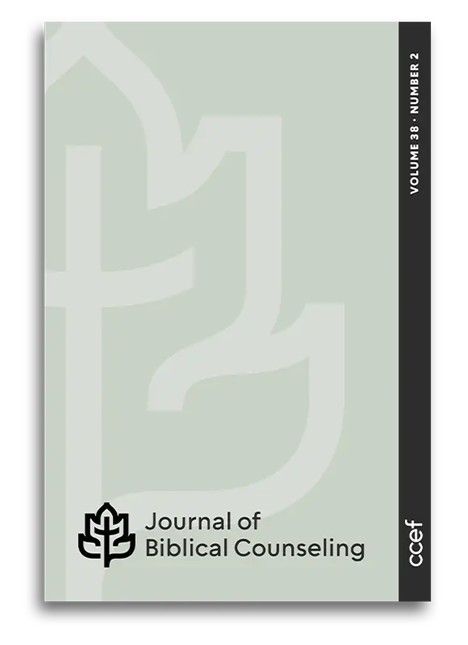
Today I’ll highlight an excellent post by Dr. Mike Emlet from the 2024, JBC 38:2 edition.. You can find Mike’s post here: A Biblical Rationale for Embodied Spiritual Practices. It is also behind a pay wall, but again, well worth the minimal price. I’ll share some quotes—not too many because I want to respect the intellectual property rights of Dr. Emlet and CCEF—but just enough to encourage you to read further.
The Focus of the Article
“Why should biblical counselors be concerned with the body? To answer this question, Dr. Mike Emlet traces the role of bodily practices from creation to consummation and offers implications for our lives and for counseling. ‘To be spiritual, he says, ‘is not some otherworldly, disembodied experience of God, but a real flesh-and-blood existence lived in concrete ways of obedience before him’” (6).
Why Biblical Counseling and the Body?
“Why should biblical counselors—as followers of Christ and as helpers— be concerned with the body? We should be concerned with the body because the way God designed our normal human existence is that our spiritual lives are not a disembodied affair. Body and soul are intertwined as we relate to God. Growing in Christ is a whole-person experience” (6).
“To be ‘spiritual’ is not some otherworldly, disembodied experience of God, but a real flesh-and-blood existence lived in concrete ways of obedience before him. We see this throughout Scripture. In this article, I will show the biblical basis for such attentiveness to our bodies as we live as image-bearing worshippers of God. I will explore the central role that bodily existence and bodily practices have from creation to consummation. Then, more briefly, I will consider some implications for our lives as both followers of Christ and as counselors” (6-7).
Created Bodies
“Our bodies are part of God’s good creation, but at times, the church has downplayed the importance of the body compared to the soul. Yet diminishing the role of the body is not biblical. Reformed theologian John Murray reminds us, ‘Man is bodily, and therefore, the scriptural way of expressing this truth is not that man has a body but that man is body.’ Consider that. You don’t just have a body; you are a body. Your body is not an appendage. It is part of the essential you” (7).
“Humans, created in the image of God, are material beings. Physicality is good. To be human is to partake of both the physical and the spiritual. And that’s the plan for eternity. Of course, we are not only bodies. Such a view skews our anthropology in a different but equally damaging way that an overemphasis on the soul does” (7-8).
Broken and Fallen Bodies
“Though the body was created ‘good,’ the impacts of the fall are holistic in scope and consequences (Gen 3)” (8).
“We see these effects of the fall in two main ways—bodily suffering and bodily sin. Illness, disease, injury, and ultimately death are impacts of the fall. It’s not just that our hearts are rebellious because of sin; our bodies are decaying and wasting away. From the nuisance of the common cold to the terror of cancer run amok, every human experiences bodily suffering” (8).
“Clearly, many struggles in life—suffering or sin—bring our bodily constitution to the forefront. The body now becomes a focal point, the tip of the spear, where we experience the brokenness of the fall. This happens throughout our lives but comes to its climax at our death” (9).
Redeemed Bodies
“The Christian hope is not to escape the body but to use our bodies as vessels of worship and service, both in this life and in the life to come. This is seen clearly in Romans 12:1: ‘I appeal to you therefore, brothers, by the mercies of God, to present your bodies as a living sacrifice, holy and acceptable to God, which is your spiritual worship.’ Paul exhorts us to use our bodies for the goal, the endpoint, of worshipping God” (10).
“In his plan of redemption, God doesn’t jettison the body as though the purest worship is only ‘soulish.’ God’s people have always been invited to bring their entire selves into his presence. It’s striking to consider in Scripture just how much of what God prescribed for his people in their worship involved bodily practices” (11).
Note: Dr. Emlet next spends ten pages outlining the Old and New Testament emphasis on embodied spirituality.
Glorified Bodies
“We are destined to die, and our bodies will return to the dust. But for believers in Christ, this is not our final condition. Jesus’s resurrection was a first fruit of our own resurrection to come. Our ultimate hope is resurrection, not a disembodied state.24 This also proves the created goodness of bodies. We get to keep them, but as they were meant to be in all their splendor!” (21).
Implications for Daily Discipleship
“While the thrust of this article has been to develop a biblical rationale for the intentional use of our bodies, both individually and corporately, I want to suggest a few practical steps to consider…. I will focus the rest of the article on proactive practices for using the body in God-honoring ways that are in line with the multisensory discipleship I outlined earlier. In other words, I’m not focusing so much on the problems with our bodies in relation to God, but on our opportunities” (22-23).
Note: Dr. Emlet then shares specific individual and corporate embodied practices.
Implications for Biblical Counseling
“While our focus as biblical counselors is to bring the truth and perspective of God’s Word to bear on the particulars of our counselees’ lives, we must remember they are embodied people! When you encourage your counselee in practices that engage the body, you help them become more fully human; it reminds them that they are indeed bodily creatures. You are helping them ‘taste and see’ that the Lord is good. Not just telling them true things that you want them to think harder about but helping them engage their five senses as they relate to God” (27).
Emlet then offers several suggestions for how biblical counselors remain attentive to the body in biblical counseling sessions. Among those suggestions, Emlet shares:
“Ask about sleep, schedule, diet, and exercise. I find there is a correlation between lack of consistency in physical disciplines and lack of consistency in spiritual ones. In 1 Timothy 4:8, Paul does say that physical training is of some value!” (28).
“Consider giving homework that encourages counselees to get outside and use the beauty of creation as a springboard for praise and prayer. Calvin considered the natural world a ‘theater of God’s glory.’ Belden Lane notes something similar about Jonathan Edwards. ‘[He] perceived the physical world, when appreciated with the new spiritual sense that regeneration brings, as offering direct training in the multidimensional way of knowing that is necessary for meeting God. This is a knowing that involves tasting and delighting—not just an apprehension of the mind, but an intimate engagement of all the senses as well’” (28).
“Ask about bodily symptoms that can be associated with anxiety, depression, or trauma such as distractibility, fidgeting, crying, dissociation, etc. Consider concrete ways to respond to these physical manifestations of distress. What bodily practices can you use to orient them toward God while you are with them and when they leave your office? I’ll mention two that may calm anxious hearts and bodies: deep breathing and grounding.
Slow, deep breathing activates the parasympathetic nervous system, which slows a racing heartbeat and rapid breathing. So, when we use our bodies in this way, we are aligned with how God created us. We don’t do slow, deep breathing as an activity unto itself. We are seeking to remember that it is in God we live and move and have our being. Our very breath is given by him. As we breathe, we remember that we are in God’s presence and under his watchful, caring eyes. Todd Stryd wrote an in-depth article on how this might look.
Grounding helps a person who is experiencing anxiety or other bodily symptoms, such as dissociation, to focus on the here and now. How do you harness the body for good in that moment? Typical approaches have a person notice things around them that they can see, touch, hear, or smell. Sometimes it’s as simple as having someone concentrate on the wood or fabric of the chair they are sitting on, or the feel of their feet on the floor. Grounding can help bring a person who’s panicked or distracted into the present moment. We are grateful for this. But as Christians, we want to do even more in the moment. We want to assist in slowing down the person’s runaway body and orient them to the Lord’s presence” (29).
Using Our Bodies to Draw Near to God
Emlet concludes with these words…
“I will end where I began, with John Murray’s reminder. You don’t simply have a body; you are a body. In light of that reality, are you marshaling your materiality as you seek to grow in Christ? Are you inviting your counselees to do the same? We must avoid treating fellow image bearers as souls without bodies (or bodies without souls for that matter)!”

I like the article and your whole person approach. I am often stunned at the ways many fellow believers struggle with integrating body, soul, spirit and our relationships, I see humans as a diamond with numerous facets but all constantly interconnected.
I am often struck by the Greek Dualism in our Christian behavior. However, I just breathe deeply, take a nap,remember that my personhood, including my body, was declared ‘very good’ by the Creator.