

A Guest Post by Chris Moles
You’re reading Part 6 in a blog mini-series of guest posts by biblical counselors who attended the 2025 Association of Biblical Counselors (ABC) Called to Counsel Conference. On Facebook and X/Twitter, I put out this call:
Did you attend the ABC Called to Counsel Conference? Would you like to share a public testimony that I could post at RPM Ministries?
- The first post was by Dr. Tim Allchin. You can read it here: Similarities and Differences Between the ABC and the ACBC Conferences.
- The second post was by ACBC Certified biblical counselor Sarah Puebla. You can read it here: The 2025 ABC Called to Counsel Conference: Christ-Centered Truth for Life.
- The third post was by Rusty Dawson. You can read it here: The 2025 ABC Called to Counsel Conference: Speaking the Truth in Love.
- The fourth post we by Brooke Shepherd. You can read it here: The 2025 ABC Called to Counsel Conference: Grace and Truth.
- The fifth post was by Dan Brewer. You can read Dan’s thoughts here: The 2025 ACBC Called to Counseling Conference: What Is All the Fuss About?
Meet Chris Moles and the PeaceWorks Podcast
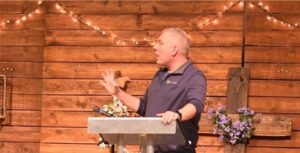 Today’s post is by Chris Moles. Chris chose to reply via his PeaceWorks from his ministry website. You can listen to his complete Podcast reply here: Called to Counsel 2025. Below, you can find an edited manuscript version of Chris’s Peacework Podcast.
In Chris’s own words:
“Welcome to the PeaceWorks Podcast. I’m your host, Chris Moles. I’m a pastor and biblical counselor who helps churches and families confront the evil of domestic violence and promote healthy and God-honoring relationships. Really excited to have some time with you today. We’re going to deviate from our question and answer. We are going to answer a question, but it’s a little bit more of a unique context.”
Introduction
So at the time of this recording, I have just returned from the Association of Biblical Counselors annual Call to Counsel Conference that takes place every year in Fort Worth, Texas. I apologize to all the other conferences out there, but it is my favorite biblical counseling conference for a number of reasons that I hope to articulate well today—in a way that isn’t a detriment to other biblical counseling conferences. I want you to attend all the conferences that you’re able to attend, but I think it’s important for me to communicate some of the reasons why I love the ABC Conference, and why I’m so thankful to be part of the team.
This was prompted by a question by my friend, Bob Kellemen. Bob asked a question on his social media.
“Did you attend the ABC conference? Would you like to share a public testimony that I could post at RPM Ministries?”
RPM Ministries is Bob Kellemen’s website. I highly recommend that to you. Bob’s a tremendous counselor, and an even better person. You’d really benefit from his material. He has a great social media presence that is very helpful to me and to a lot of other folks, in particular, to the gospel-centered biblical counseling community.
The Format: Worship and Teaching
The particular aspects of the ABC Called to Counsel conference that stands out to me is the track-based system surrounded by the plenary sessions. The plenary sessions are the heartbeat of the conference. Describing them as a worship service or chapel service would probably be the best way to put it.
At the ABC Conference, we have this wonderful chapel service. Then we go back to our learning environments—the tracks. This combination is really unique in some ways to our movement and just a huge blessing.
The Atmosphere: Familial
I think the atmosphere is the other piece that makes the ABC Conference my favorite. The atmosphere at ABC is tremendous. I would call it familial. It feels like a conference that cares about its attendees. They are as driven to care for the 300 people that was there in 2018 as they are the 1.300 that were there this year. They have a passion for their participants.
I know there has to be an army of people involved in this. But I think the addition of Shauna Van Dyke a few years ago invited a real care and concern and precision to that event. One thing I’ve always appreciated about Shauna since I’ve been involved in the conference is her insistence on keeping the speakers together, bathing us in prayer as presenters. We usually get together for dinner. There’s an opportunity that we all try to get together throughout the event, and they do a great job of that at ABC. We lock arms and we pray for what’s going to happen that weekend.
It’s a powerful moment. I’m getting a little emotional thinking about it because that group of folks in that circle as a biblical counselor, as a church leader, as an author, as a speaker, as someone in the movement who gets to participate at that level, I do not think I could survive if it wasn’t for that group of people. They are such an encouraging tribe.
Biblical Unity in Diversity
And another thing that maybe to add to that, Bob, that I know you would appreciate, they are such an encouraging tribe and they make up one of the more diverse tribes. It really is, as I’m re-imagining me being in that circle and having my arms locked with those wonderful people. I look around from the different places that we come from, denominationally, we’re somewhat different theologically, practically we’re different as ABC is a unique organization, training pastors, training laypeople, and training licensed counselors in the art and practice of biblical counseling. It is beautiful to look around the room and recognize the diversity.
It reminds me of those early days and all the work that you did, Bob, with the Biblical Counseling Coalition, realizing that there is so much more we have in common than the things that separate us. And I jokingly call that tribe the super friends, as they have just been a tremendous blessing to me over the years as a helper, as a Christian, and of course as a biblical counselor.
CCEF: Academic Precision
The atmosphere at every conference is unique. As a speaker, you tend to accommodate as best you can that unique atmosphere. At CCEF, they do this wonderful job of thematically structuring their conference. If you have not been to a CCEF conference, I would encourage you to attend. It’s well organized, well structured, planned way in advance. As I’m thinking about the atmosphere at CCEF, the first word that comes to my mind is academic or precision.
They generally have a theme. You’re walking through that theme for all of your breakouts and your plenaries. There’s an aura of professionalism, and it is resource heavy. Those are the words that come to my mind. It’s a rich environment. And participants want that enrichment. They’re coming to soak up this resource-heavy atmosphere, and I think that’s what makes it a very special place.
ACBC: Church-Like
ACBC has more of a pastoral feel to it, in my mind. It’s going to feel like a larger church, a more structured church setting. It’s Scripture-heavy as it should be, and participants tend to want answers. Now, I do think the difficulty in navigating that is sometimes participants want the right answers, and that makes it really hard to accommodate or facilitate when you’ve only got maybe fifty minutes to do a presentation.
IABC: Casual
IABC, the International Association of Biblical Counselors, is more of a casual environment and focused on the laity. I’ve often heard it said the view from the pew is one of the things that make IABC unique.
They have a little more theological diversity, which is one of the reasons why I was comfortable there, kind of the everyday practitioner. I kind of envision an application heavy environment where we’re kind of the lunchbox conference and participants tend to want community that reassures my experience.
Back to ABC: Care-Heavy
Then ABC, as I said earlier, the atmosphere there feels familial, but at the same time, liturgical (worship-focused). And what I mean by that is that the plenaries feel like chapel/worship services for counselors who are weary and need encouragement. It is strategic in the track-based system, as I said, and I think it’s care-centered, where some conferences are application-heavy or Scripture-heavy, or resource-heavy, ABC is really care-heavy.
I don’t know that we would hear “care better” necessarily at the ABC conference, but you will hear concepts of care in a holistic manner. That focus is really unique to our movement, and very helpful. I think participants want to learn in relationship. And that’s one of the things I really appreciate about the ABC conference.
I think all of our major conferences have a tremendous amount to offer to the biblical counseling movement when it comes to education, information, relation, all of those things. However, the ABC conference does fit a unique niche in our biblical counseling world as a liturgical/worship, strategic, care-centered environment where folks can be encouraged through worship and community.
Participants can be educated through strategic relationships with experts and case wisdom, which is a huge part of why the track speakers are chosen for the things that they do. ABC also has multiple resources. ABC is also one of the organizations that can facilitate certification and specialization in addition to the education that they offer.
Spiritual Abuse Track
This week I spoke in the spiritual abuse track, so I want to give a shout out to all the folks who attended the track, as well as to our wonderful team. Greg Wilson is the track leader. Kirsten Christianson , Timothy St. John, and myself were the speakers. If you get a chance, the recordings are going to be available.
Two things that stood out to me, Bob, about the spiritual abuse track, and I know this is of interest to you. One, that ABC insisted on having a spiritual abuse track as part of the conference—really acknowledging spiritual abuse in its dynamics as something that biblical counseling can address.
And, two, the construction of the team this year was fascinating. As my listeners already know, Greg Wilson is an LPC in the state of Texas and a partner of mine. And so Greg comes from a more clinical perspective, although he has pastoral experience and of course biblical counseling experience. Kirsten Christianson works primarily in the church and as a consultant and biblical counselor. I’m more of a traditional biblical counselor. I actually jokingly said I was the new guy on the team, and you all are familiar with me if you’re listening to the podcast. And then Timothy St. John is a pastor and a counseling pastor. All of us brought unique perspectives.
Greg led us through an overview of spiritual abuse. Kirsten walked us through a masterclass on understanding spiritual abuse from a victim perspective. I tried to help us understand accountability, confrontation, and distinguishing between what we were calling pervasive forms of abuse and opportunistic forms of abuse. And then Tim came along and wrapped it up beautifully with responding to church hurt and the aftermath. And that’s an example of what a track based process would look like, and that’s what our participants got a chance to walk through, at least in the spiritual abuse track.
Wrapping It Up…
Alright, friends. Thank you so much for tuning in. And thank you again, Bob, for your tremendous work, and for today’s prompting question about the ABC Conference. Until next time, friends, God bless.

Trackbacks/Pingbacks