
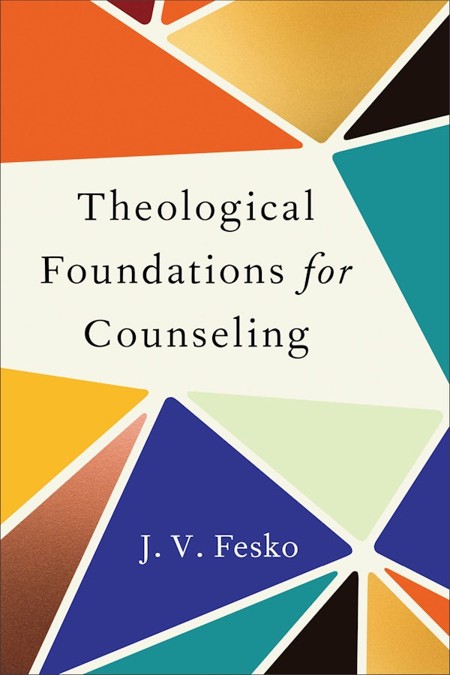
In J. V. Fesko’s book, Theological Foundations for Counseling, at several points he engages with the views of Heath Lambert. I provide the following quotes from Fesko’s book without commentary. My collation of these quotes is simply for research purposes, and they do not connote agreement on my part with Fesko’s assessments. If Lambert provides a public response, I’ll seek to collate that also.
Note: For my engagement with Fesko’s book, see, 6 Initial Reflections on J. V. Fesko’s, Theological Foundations for Counseling.
On General and Special Revelation
Fesko writes:
“Heath Lambert, for example, mistakenly argues that general revelation does not refer to ‘all the true things in the world but what God reveals about Himself in all true things (Lambert, Common Grace, 23). Does Lambert mean to suggest that there are truths about the world that do not come from God? Moreover, when general revelation reveals things about God, are these revealed truths irrelevant to counseling? Is not all truth relevant to helping people overcome sin? Does not our knowledge of ourselves as humans connect to our knowledge of who God is?” (Fesko, Theological Foundations for Counseling, 22).
On Common Grace
Concerning Lambert’s views on common grace and biblical counseling, Fesko states the following:
“Some associated with the ACBC, such as Heath Lambert, have tried to offer a more nuanced assessment of secular psychology. Lambert acknowledges, ‘The observations of psychologists consist of the information they come to know through their careful work,’ and as such, these observations, not their interpretations, can be admitted to the Christian counseling process (Lambert, Theology of Biblical Counseling, 76. See similar comments in Lambert, Common Grace, 61-83). Lambert places these observations under the category of common grace, which Christian counselors can employ as long as they do not displace a Christ-centered worldview of the Bible (Lambert, Theology of Biblical Counseling, 81). If Lambert were to leave things here, there would be little problem, but what he gives with the left hand he takes away with the right: ‘When biblical counselors emphasize the use of Scriptures to the exclusion of other resources, it is not a denial that accurate information is available in other places. It is a statement that no other source of information, no matter how true, offers the kind of help for counseling that God does in his Word. . . . This assertation is not a rejection of common grace. It is an admission that there are things more important than common grace’ (Lambert, Theology of Biblical Counseling, 84). In other words, as much as there might be genuine common-grace insights from secular psychologists, they are unnecessary. Lamber does not reject common grace but nevertheless pushes it away: ‘Using the doctrine of common grace as a theological defense for utilizing resources outside of Scripture is a new and troubling development in the history of pastoral care’” (Lambert, Common Grace, 59) (Fesko, Theological Foundations for Counseling, 58-59).
“ACBC counselors pass by common-grace insights. If there is any doubt about this, Lambert makes this point explicitly: ‘Christian counselors have to choose either the Bible is insufficient for counseling, and we just evaluate the legitimacy of secular approaches on something other than biblical grounds, or the Bible is sufficient to develop counseling principles, and the secular therapies add nothing essential to the church’s counseling wisdom’ (Lambert, Theology of Biblical Counseling, 99). The common-grace insights of unbelievers may hold genuine truth, but Christian counselors do not need them; they can rest entirely on Scripture. Special grace is more important than common grace, and thus ‘these therapies do not add anything essential to a robustly relevant and biblical counseling system. We simply do not need the secular therapies in order to have a meaningful counseling approach’ (Lambert, Theology of Biblical Counseling, 100)” (Fesko, Theological Foundations for Counseling, 59).
“Jay Adams completely looks away from anything outside of Scripture, and the ACBC and Heath Lambert acknowledges common grace but nevertheless opt for Scripture only…” (Fesko, Theological Foundations for Counseling, 59).
“These claims against or ambivalence toward common-grace insights certainly raise several questions considering the previous chapters on general revelation and special revelation, faith and reason, the doctrine of the covenant, and this chapter on common grace. Why does Lambert pit common grace against special grace? He says, ‘There are things more important than common grace’ (Lambert, Theology of Biblical Counseling, 84). We can restate this claim in broader terms to see if his notion still holds true. Take the statement, ‘There are more important things than ____________,’ and then fill in the blank with any of the following: creation, general revelation, natural law, human reason. Is redemption more important than creation? Is Scripture more important than general revelation. Is faith more important than reason? Quite simply, no. In the words of Kuyper,
‘For this reason we must, before going any further, wipe out, root and branch, the erroneous view that the natural knowledge of God is not as indispensable for faith as the revelation in Christ. We must remove the false idea that the natural knowledge of God is even conceivable apart from faith. We must abandon the assumption that Revelation can ever compensate for what we would miss if the natural knowledge of God were absent. We must put a stop to the misconception that the natural knowledge of God ends where Revelation begins. All Scripture rests on the natural knowledge of God. . . . The natural knowledge of God, far from lying outside the area of faith, is an absurdity outside of faith. . . . It touches the conscience of the unbelieving world, awakens it from its unbelieving slumber, and looks in all living things for points of contact with the kingdom of God’ (Kuyper, Natural Knowledge of God, 85).
Lambert unnecessarily places common grace in competition with special grace. Since when is God’s truth, whether in creation, innately in human beings, or in his providentially superintended preservation of the creation, less important than Scripture and saving grace? Saying this is akin to saying the rear wheel of a bicycle is more important than its front wheel. There is no special revelation apart from general revelation, no special grace apart from general revelation, and no redemption apart from creation. The problem with such dismissals of common-grace insights is that the ACBC, Lambert, and Powlison and Welch look at only the proximate source of the information rather than its ultimate source—namely, the triune God” (Fesko, Theological Foundations for Counseling, 61).
“If we adopt the position of Lambert, the ACBC, or Powlison and Welch, what then do we make of Moses’s use of the Code of Hammurabi in the covenant code, Solomon’s incorporation of the Thirty Sayings of Amenemope in Proverbs, or Paul’s quotation of the pagan poets at Mars Hill? Rather than ignore common-grace insights, they incorporate them into special revelation. Why? Because they saw God’s truth in the creation. Calvin’s admonition bears repeating: ‘If we reflect that the Spirit of God is the only fountain of truth, we will be careful, as we would avoid offering insult to him, not to reject or condemn truth wherever it appears. In despising the gifts, we insult the Giver’ (Calvin, Institutes, 2.2.15). This does not mean, of course, that Christian counselors should blindly accept the findings of unbelieving psychologists and psychiatrists. But neither should we blindly accept the findings of biblical counselors; we should always test all claims against Scripture. We must be good Bereans. As the Bereans verified the apostle Paul’s teaching against Scripture, we should do the same (Acts 17:11). We must always filter everything through Scripture to ensure that we do not thing, speak, or write things that ignore, contradict, or undermine God’s truth” (Fesko, Theological Foundations for Counseling, 61-62).
On the Sufficiency of Scripture
The sufficiency of Scripture and biblical counseling provide the third area where Fesko engages with Lambert.
“Biblical-counseling advocate, Heath Lambert offers a similar view when he writes, ‘Christian counselors have to choose either the Bible is insufficient for counseling, and we just evaluate the legitimacy of secular approaches on something other than biblical grounds, or the Bible is sufficient to develop counseling principles, and the secular therapies add nothing essential to the church’s counseling wisdom’ (Lambert, Theology of Biblical Counseling, 99). Again, he maintains, ‘Scripture addresses counseling-related problems to such an extent that no other resources are required for counseling content’ (Lambert, Common Grace, 67). Lambert foists a false dichotomy on counselors when he argues that one must choose between viewing the Bible either as insufficient or sufficient. He makes this claim because he misrepresents the doctrine of sufficiency. See, e.g., Lambert, Sufficiency. This book has several errors in its account of the sufficiency of Scripture. First, it sets itself against the whole Western tradition of theology in rejecting the idea of two books, creation and Scripture (p. 49). Second, it incorrectly defines and explains general revelation (pp. 54-65). Third, when the book specifically addresses the doctrine of sufficiency, it does so without consulting many and varied historical sources and relies on more recent ahistorical and biblicist approaches (pp. 122-23). The book claims, ‘We have more than enough scriptural resources to assist any troubled person whom the Lord would send our way’ (pp. 132). This is biblicism and does not account for how sufficiency has been explained. Fourth, the book erroneously defines the concept of accommodation, which is not ‘the way God preserves the inerrant quality of Scriptures without losing the individual personality of the human authors who compose the text’ (p. 138) but is rather how God condescends to finite human ways in order to reveal himself. See Muller, Dictionary of Latin and Greek Theological Terms, 4)” (Fesko, Theological Foundations for Counseling, 69).
“Both Rutherford and Burgess help us to understand the scope and limits of the doctrine of sufficiency. Both show that Scripture has been designed chiefly to teach about the doctrine of salvation, and while in the broadest of terms it speaks to all of life, it does not speak to all of life in the same way. The explanations of Rutherford and Burgess stands in contrast to Lamber’s claim: ‘The Bible was written to be a comprehensive guide to all of human life and functioning’ (Lambert, Common Grace, 73). Note, for all of Lambert’s claims to appeal purely to Scripture, he does not seem to acknowledge that he employs the concept of worldview. The concept of offering a comprehensive view of the world is of philosophical, not biblical origins, and is foreign to classic Reformed theology. See Fesko, Reforming Apologetics, 97-134). Sufficiency does not mean that Scripture addresses science, art, medicine, or business—it does not address every circumstance in life. It does not preclude the use of extrabiblical creeds and confessions. To supplement Scripture’s teaching with extrabiblical sources is not a problem so long as we do not elevate extrabiblical sources to the same authority as Scripture. To put this in theological terms, Christians can appeal to general revelation. To use general revelation in the Christian life does not mean Scripture is insufficient; it merely acknowledges that God addresses some things in the book of nature and others, such as salvation, in the book of Scripture. What, then, are the specific boundaries and characteristics of the sufficiency of Scripture?” (Fesko, Theological Foundations for Counseling, 73-74).
“Lambert cites a passage from Frame that uses the illustration of plumbing. Frame writes, ‘Scripture contains divine words sufficient for all of life. It has all the divine words that the plumber needs, and all the divine words that the theologian needs. So it is just as sufficient for plumbing as it is for theology. And in that sense it is just as sufficient for science and ethics as well’ (Frame, Doctrine of the Word, 221; Lambert, Theology of Biblical Counseling, 49). Lambert then explains, ‘When Frame says that the Scripture is sufficient for plumbing, he means that God has given to plumbers a sufficient amount of revelation to know how to do their work in a way that honors him’ (Lambert, Theology of Biblical Counseling, 50. Elsewhere Lambert seems to backtrack when he writes, ‘I am aware of no person in the biblical counseling movement who has argued that the Bible contains every word about every topic; Lambert, Common Grace, 68. So, while it does not address every topic, apparently it does address plumbing.) Lambert then applies this line of reasoning to counseling. If we shine the light of careful thought on this line of argument, a number of problems become evident” (Fesko, Theological Foundations for Counseling, 77).
“Does Scripture contain words sufficient for all of life as Frame attests? Yes. Does it have all the words that the plumber and the theologian need? Yes, for salvation and the duties God requires of plumbers and theologians. Scripture does not, however, contain any instruction whatsoever aimed directly at plumbing as a vocation. Should a plumber use PVC or copper pipe? A traditional or a tankless water heater? What type of insulation should pipes have? To borrow language from the Westminster Confession, these are matters that are ‘common to human actions and societies,’ and plumber can use reason, judgment, and common sense to make plumbing decisions as well as learning gleaned from civil engineering, material science, and building codes. Another problem with Frame’s illustration is that theologians and plumbers are not analogous vocations. The Bible is God’s special revelation and the chief source of a theologian’s studies, whereas a plumber does not deal with the Bible but with pipes and water, aspects of general revelation but also subcreated realities of which the Bible says nothing” (Fesko, Theological Foundations for Counseling, 77).
“The problems with Lambert’s use of Frame’s plumbing illustration carry over to counseling. To be sure, Scripture has much to say about common topics in counseling: stress, anxiety, pain, suffering, violence, fear, selfishness, and the like. But does this mean that the counselor never needs to turn to the book of nature? One of the implicit assumptions that underlies biblical counseling views is that the Bible deals with spiritual problems whereas medical doctors handle physiological ailments…. Yet the Bible teaches that humans are embodied souls, or conversely, ensouled bodies. We cannot always neatly separate the spiritual from the physiological. This is another flaw in Lambert’s account of the sufficiency of Scripture: ‘Many people affirm the inerrancy and authority of Scripture in matters of faith and practice, but do not affirm the sufficiency of Scripture for understanding and resolving the spiritual (non-physical) problems of man; (Lambert, Sufficiency, 11, emphasis added by Fesko). Lambert presents spiritual problems as if they are ‘non-physical,’ which bifurcates human existence into two separate realms and ignores the fact that the spiritual is physical and the physical is spiritual…. If the body plays a role in counseling issues, this means we must consult experts in the human body and behavior. Future chapters provide some specific examples, but for the time being, we can say that the Bible does not give any information about the physiology of the brain—how the brain, a bodily organ, functions. What might we learn from common-grace insights from medical professionals about the function of the brain, and how might his inform our counseling? Such knowledge falls outside the pages of Scripture, but why would we ignore God’s book of nature? The only time extrabiblical knowledge undermines the sufficiency of Scripture is if it contradicts biblical teaching. But if we recognize that God gives us both general and special revelation, then in principle there is no conflict between appealing to and employing extrabiblical knowledge in the counseling process” (Fesko, Theological Foundations for Counseling, 77-78).
Addendum
For more about Fesko’s book, see my interactions here:
6 Initial Reflections on J. V. Fesko’s, Theological Foundations for Counseling.