
The Bible and Counseling Conversations
As biblical counselors, the Bible should guide our counseling conversations.
Also, the Bible should guide our conversations about counseling.
A New Book
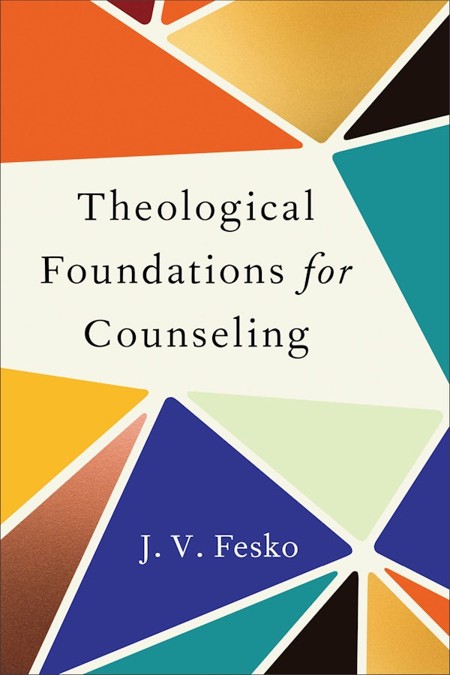
Initial responses by some biblical counselors to J. V. Fesko’s book, Theological Foundations for Counseling, have been extremely negative—and hyperbolic.
One biblical counselor feels “embarrassed” for the writer because it’s like books that are “so excruciating that it’s like watching a train about to wreck.”
Another biblical counselor proffers sadly that “the book is not well researched and lacking in knowledge of both integration and biblical counseling.” That same tweeter is “quite surprised by the lack of scholarship.”
Perhaps some more tempered engagements are in order. I’ve completed my second reading of Fesko’s book. Here are six big-picture reflections—not a review.
Reflection #1: This is not an academic text/tome, but it is a scholarly book, nonetheless.
Theological Foundations for Counseling wasn’t meant to be an academic tome. It is a rather short book, almost booklet size, or mini-book size, at 168 pages. It seems designed to take a theologian-professor’s perspective and break it down into concepts that “the average committed Christian” and the first-year Bible college or seminary student can understand and digest. Still, it is not lacking in scholarship or research. For example:
- Fesko demonstrates a knowledge of the “lay of the land”: Clearly, Fesko is not lacking knowledge of the current landscape, as he writes, “A cloud of discord, however, hangs low and dark over the horizon when it comes to determining how, precisely, Christians should counsel” (ix). He has that right! Fesko is aware enough of the modern terrain, that he correctly predicted the likely response. “I suspect most will want to categorize this work as integrationist, rather than biblical counseling” (xii). He challenges that categorization, by the way.
- Fesko demonstrates knowledge of biblical counseling and integration: It seems apparent from his background, that Fesko has a significant amount of knowledge about both integration and biblical counseling. Consider:
-
- Fesko says on his first page of writing, “My own introduction to counseling came with my entrance into the pastoral ministry decades ago when my presbytery required that I read Jay Adams’s book Competent to Counsel” (ix). Fesko “absorbed the book’s content and at times drew on some of its ideas when I counseled people as a new pastor” (ix). Here we have someone with several decades of awareness and application of Adams’s nouthetic biblical counseling. How many decades of engagement is necessary for a scholar-practitioner-pastor-counselor-professor to have a legitimate level of knowledge of modern biblical counseling?
- Fesko then “invested in the exegesis of Scripture” and “the study of theology” (ix) doing theological retrieval for pastoral ministry, preaching, and counseling. There is more than one way to become knowledgeable about pastoral biblical counseling…
- In 2019, Dr. Fesko began teaching at RTS Jacksonville in systematic and historical theology. “Among the courses I was tasked with teaching was Theological Foundations for Counseling” (x). Sounds like someone who might be knowledgeable in biblical counseling and integration…
- Sure enough, Fesko writes, “I was refamiliarized with issues that Adams raised in his book about the supposed inadmissibility of incorporating anything that hinted of psychology into Christian counseling” (x). Fesko then describes his engagement with the significant text, Psychology and Christianity: Five Views. Sounds like someone who is knowledgeable about biblical counseling and integration…
- Consider Fesko’s expanded bio, in his own words: “I am the Harriet Barbour professor of Systematic and Historical Theology at Reformed Theological Seminary in Jackson, Mississippi. I am an ordained minister in the Orthodox Presbyterian Church. I’ve served in ministry for nearly thirty years as a church planter, pastor, and now full-time professor. I have written around forty books on various theological subjects and strive to write material that edifies the church, whether for the academy or for the person in the pew. I love reading classic Reformed theology and sometimes feel like I get lost in the sixteenth and seventeenth centuries.” Sure seems like someone skilled in scholarly research and experienced in pastoral ministry.
- Fesko also examined Adams’s relationship to Mowrer—again, demonstrating knowledge about nouthetic biblical counseling and Mowrer’s secular behavioral therapy model.
- Fesko Engages Research Robustly and Broadly: Quoting others does not, in and of itself, denote scholarship—it all depends upon how one mines those quotations in context and how one engages with those quotes. Still, the resources one engages with can be a mark of scholarship and research. To that end, I did a quick compilation of Fesko’s footnotes. I am likely off one or two here and there. Even this brief, reader-friendly book has at least (roughly) 285 resource citations/quotes that cover a broad swath of authors/categories. Fesko quotes and engages with the following:
-
- Theological Resources a Total of 131 Times:
-
-
- Theological Works, Confessions, Church History, Lexical Works: 82 Times
- Calvin: 24 Times
- Bavinck: 15 Times
- Augustine: 7 Times
- Kuyper: 2 Times
- Van Til: 1 Time
-
-
- Biblical Counselors a Total of 41 Times:
-
-
- Lambert: 20 Times
- Powlison: 10 Times
- Adams: 6 Times
- MacArthur: 3 Times
- ACBC: 2 Times
- Integrationists: 6 Times
- Christian Psychologists/Eric Johnson: 2 Times
- Mowrer: 2 Times
-
-
- Other Footnote Quotes/References Not Included Above: 103 (Such as C. S. Lewis, Neuroscience, Literature, Etc.).
Reflection #2: A book does not have to agree with you to be well-researched and scholarly.
If you are a “classic biblical counselor” (or a “neo-nouthetic counselor”), you may be unhappy with this book. For example, while Fesko quotes Lambert 20 times and Powlison 10 times, Fesko disagrees with them almost every time. As someone who loved and ministered side-by-side with David Powlison, I had to do some deep breathing exercises to calm and regulate my nervous system (I’m being facetious, playful, like David often was).
What do you do when someone disagrees with someone you agree with? What do you do when an author disagrees with you? Here’s what we avoid, said a couple of different ways:
- Let’s avoid the mindset that says, “Anyone who disagrees with me must be ignorant.”
- Let’s avoid the mindset that says, “His scholarly research came to different conclusions than my scholarly research, so his work lacks scholarly research.”
Those are dismissive, defensive, combative responses. They’re actually emotionally-reactive, immature responses rather than theologically-thoughtful responses. Can anyone imagine David Powlison responding like that…?
Here’s what we can do instead:
If you disagree with how Fesko develops and supports his dozen categories for a theological foundation of counseling, then engage him in fair and balanced academic repartee.
Rather than dismissive, this response demonstrates academic-theological curiosity. That’s how David Powlison would have responded. He would have allowed Fesko’s writing to be a catalyst to drive him back to Scripture like the Bereans in Acts 17:11.
“Now the Berean Jews were of more noble character than those in Thessalonica, for they received the message with great eagerness and examined the Scriptures every day to see if what Paul said was true.”
Ask yourself, “Do some of the initial responses to Fesko by biblical counselors reflect being ‘noble,’ ‘noble-minded,’ or having ‘noble character’?” Or, ask, “Would David Powlison have responded to Fesko the way some biblical counselors are responding?”
Reflection #3: This is not a biblical counseling book.
As quoted earlier, Fesko states upfront that, “I suspect that most will want to categorize this work as integrationist, rather than biblical counseling.” He also says, “I object to this classification on two grounds” (xii). I’ll leave you in suspense regarding those two grounds.
I would love to have a conversation with Dr. Fesko and ask, hopefully in a gentle, friendly, collegial, non-accusatory way, something like this.
“You pointedly say your approach is not integration. I suspect that many readers who are aware of the discussions about integration/biblical counseling over the past fifty years might perceive that you are providing arguments that align with the “classic” integrative position.
In fact, I would say that your book collates the best arguments—biblically, theologically, and historically—for the integrative position. Note, I am not saying that your arguments ‘won me over.’
So, the question(s):
‘In your mind, how is your view different from the typical/current integration view, for example, as described in Psychology and Christianity: Five Views?’
‘In your mind, if you were ‘forced’ to label your view, what would you call it (in five words or less) and how would you define it (in fifty words or less)?’”
I would also want to have a conversation with Dr. Fesko about Dr. Powlison.
“Dr. Fesko…may I call you J. V.? I’m not sure you captured the essence of Powlison on the sufficiency of Scripture, common grace, general revelation, and secular psychology. Would you be willing to read this article that collates primary source quotes from Powlison? David Powlison on Common Grace, Biblical Counseling, and Secular Psychology. After reading this and the primary sources I link to,
‘Do you have any different, more nuanced summary of Powlison on these issues?’
‘How might you summarize where you and Powlison align? Where you differ?’”
Reflection #4: This is not a theology of biblical counseling, but what is Fesko’s theology of counseling?
If you’re expecting a book where a biblical counselor outlines a systematic theology of what historic nouthetic biblical counselors have taught, this is not that book. Rather, this is a theologian, professor, pastor, practitioner outlining a dozen categories that Christians need to think through in order to build a foundation for a theology of counseling. That’s an important distinction.
That said, it is Fesko’s argument that he is providing a biblical process for thinking through how to develop a theology of counseling. For example, Fesko says, “First, the positions laid out in this book are decidedly biblical” (xii, emphasis in the original). And, “First, Christian counseling means that that those who advise others seek to do so from the standpoint and authority of Scripture” (xix, emphasis in the original).
So, I suspect most readers would want to know:
“What does your model of counseling actually look like?”
“Specifically, what is your theology of people, problems, and solutions?”
- Theological Anthropology: Creation—Understanding People (How did God design us? What is the nature of human nature?)
- Theological Hamartiology: Fall—Diagnosing Problems (What went wrong? What is the core problem we face?)
- Theological Soteriology: Redemption—Prescribing Solutions (How do people change? Change into what? What is the goal, purpose, end-point?)
While not the purpose or focus of this book, these three categories should be the result of a theological foundation for counseling. Fesko’s book provides his epistemology for biblical counseling—how we know truth. However, it does not provide a specific anthropology, hamartiology, or soteriology for biblical counseling. Some glimpse into this would have been a helpful addition to the book—if not an essential addition.
Additionally, readers would rightfully want to know:
“How do you propose that Christians who counsel use your twelve categories in building a theology of 1.) people, 2.) problems, and 3.) solutions?”
Note that these three foundational categories address prescriptive theory building, not simply descriptive observations. So, readers will explicitly want to know:
“Are you saying that extra-biblical sources like general revelation/common grace provide, at least in part, the content for building a theology of people, problems, and solutions?”
“If so, could you provide specific examples of how you use extra-biblical resources to build your model of people, problems, and solutions?”
“If not, could you make it explicit that you are talking about descriptive observations rather than prescriptive theory building?”
Further, Fesko uses Calvin’s imagery of Scripture as the “spectacles” (24) through which we assess general revelation and through which we address “the noetic effects” of sin related to general revelation and common grace information (24, emphasis in original). So, readers would also want to know:
“Given your theological foundations, what do you do when general revelation and common grace findings conflict with special revelation/scriptural findings about people, problems, and solutions?”
“Could you provide specific examples of how you use the Bible to assess and address extra-biblical prescriptive theory building regarding people, problems, and solutions?”
This is really where the proverbial “rubber meets the road” in building a theology of biblical counseling.
Reflection #5: This book could benefit either from a sequel, or an addendum.
Fesko includes in each chapter a section he entitles, “Counseling.” What he does only sparingly and broadly in this section is describe what his view would look like in real-life counseling conversations. What would add so much is a chapter-by-chapter detailed case study, or one lengthy case study at the end of the book, or a sequel book of case studies.
Fesko tells us what he believes and what he disagrees with in a dozen categories. But what would that look like in two settings?
- In his office in-between sessions:
Get us inside your mind and help us to see how your dozen categories guide your work in-between counseling sessions.
- What would you do?
- What would you read?
- How would you formulate your thinking about the previous meeting?
- What would be involved in developing plans for your next meeting?
- What resources would you use to understand the person, diagnose the problem, and wisely discern solutions?
- Where, specifically, would the Bible (special revelation) fit into your approach?
- Where, specifically, would general revelation and/or common grace fit into your approach?
- In his counseling sessions:
Show and tell us how you counsel.
- Give us verbatim case studies.
- Write out a counselor-counselee dialogue.
- Describe how does a counselor with your convictions actually counsel someone.
- You talk, rightly, about the importance of context and setting. So, perhaps have one case study with the setting being a local church with a committed Christian counselee. Then, perhaps have another case study with a setting of a Christian who is a guidance counselor in a public high school (or whatever settings you want to use).
Note: It would be great if every Christian writing about counseling would do this. We’d have much greater clarity.
Reflection #6: This book could be very beneficial to the current conversations if engaged with well and wisely.
If I were still a full-time professor of biblical counseling, I would absolutely make Fesko’s book required reading.
Here’s what I would not allow when I wrote the assignment: you cannot simply state all the areas you disagree with; you can’t just state the weaknesses you perceive.
Here’s what I would require instead.
Read J. V. Fesko’s book, Theological Foundations for Counseling. Write a ___ page fair and balanced scholarly response review. Your response review must include:
a. A section covering approximately 25% of your paper describing where you agree with the book, noting the strengths of the book, and outlining the biblical, theological, and historical arguments in the book. In this section, biblically defend your areas of agreement.
b. A section covering approximately 25% of your paper describing where you disagree with the book. What are the weaknesses that you see in the book. Where do you think the author “got it wrong”? In this section, engage in a fair and balanced way with the author’s biblical, theological, and historical arguments. Use biblical theology, systematic theology, and historical theology to defend/support your areas of disagreement.
c. A section covering approximately 20% of your paper where you develop follow-up questions that you would ask the author if you had an hour interview with him.
d. A section covering approximately 30% of your paper where you take each of the twelve foundational categories the book develops and you write an “abstract-length” introductory statement of your biblical convictions about each category.
This is a quickly-developed, rough-draft version of a possible syllabus assignment. Still, I think you get the idea: engage in fair and balanced scholarly biblical-theological-historical engagement.
Join the Conversation
If you’ve read Fesko’s book, what are your fair and balanced thoughts? What would your objective book review sound like?
How can we act like biblical counselors in how we have conversations about biblical counseling?
Addendum: Fesko on Lambert
For a collation of what Fesko writes about Lambert, see:

This is an excellent review. It is balanced, fair, scholarly and reflects years of good thinking. We don’t have to agree. To move the conversation forward we should interact with the material in a way that demonstrates that we have understood the author and his work.